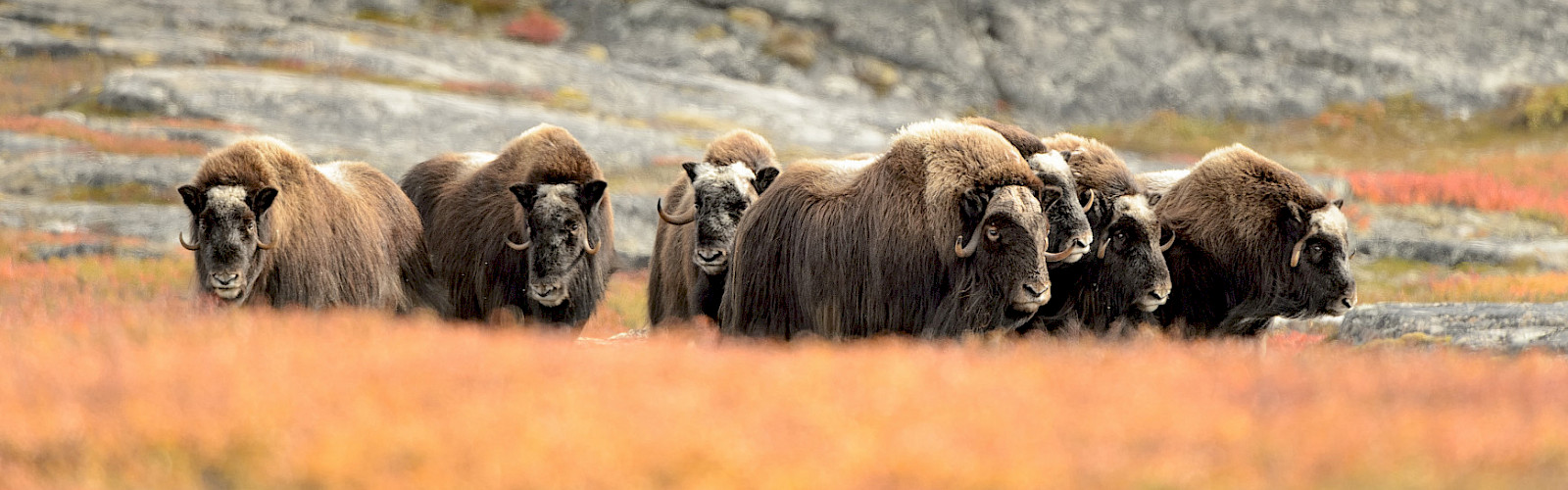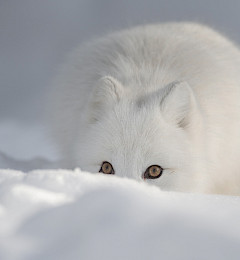
The average population of Arctic species increased by 16% between 1970 and 2004
however, this is not consistent across biomes, regions, and taxa. (Source: ASTI 2010)
High Arctic species populations have decreased by an average of 26% between 1970 and 2004.
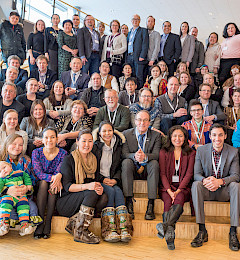
Of the 21 Northern languages that have gone extinct, 48% of those have disappeared since 1990.
This indicates an increasing rate of language extinction. (Source: ABA 2013)
More than 50% of the world's wetlands are in the Arctic and sub-Arctic
Wetlands are important for carbon storage and water cycling. (Source: ABA 2013)
The ivory gull, a high Arctic species has decreased by 80% (since the 1980s)
on its Canadian range. (Source: ABA 2013)
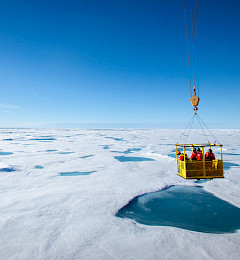
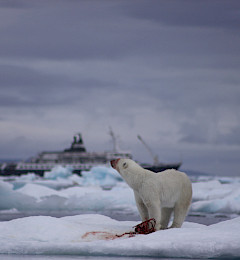
Polar bears are affected by decreasing sea ice
The global population of polar bears is predicted to decrease by 30% in the next 45 years. (Source: ABA 2013)
CAFF on Facebook
Events Calendar
| Su | Mo | Tu | We | Th | Fr | Sa |
|---|---|---|---|---|---|---|
| 1 | ||||||
| 2 | 3 | 4 | 5 | 6 | 7 | 8 |
| 9 | 10 | 11 | 12 | 13 | 14 | 15 |
| 16 | 17 | 18 | 19 | 20 | 21 | 22 |
| 23 | 24 | 25 | 26 | 27 | 28 | 29 |
| 30 | 31 |
CAFF Twitter
CAFF @CAFFSecretariat
RT @NIST: Seabird eggs reflect their exposure to contaminants in the environment. To track these contaminants over time, Stacy Schuur and h…
CAFF @CAFFSecretariat
Buffies travel 18,000 miles along the Midcontinent flyway, connecting the Arctic and South America, follow its trav… https://t.co/mAF3WDN8ks
CAFF @CAFFSecretariat
Read the children's storybook about the Spoon-billed Sandpiper, published by The @niekorea. Join Spoonies as they t… https://t.co/gTDoFjil7f
CAFF @CAFFSecretariat
RT @JFLinnebjerg: If you are curious about what our #seabird field site looks like in #Greenland and what we do, then watch this (it’s in D…